

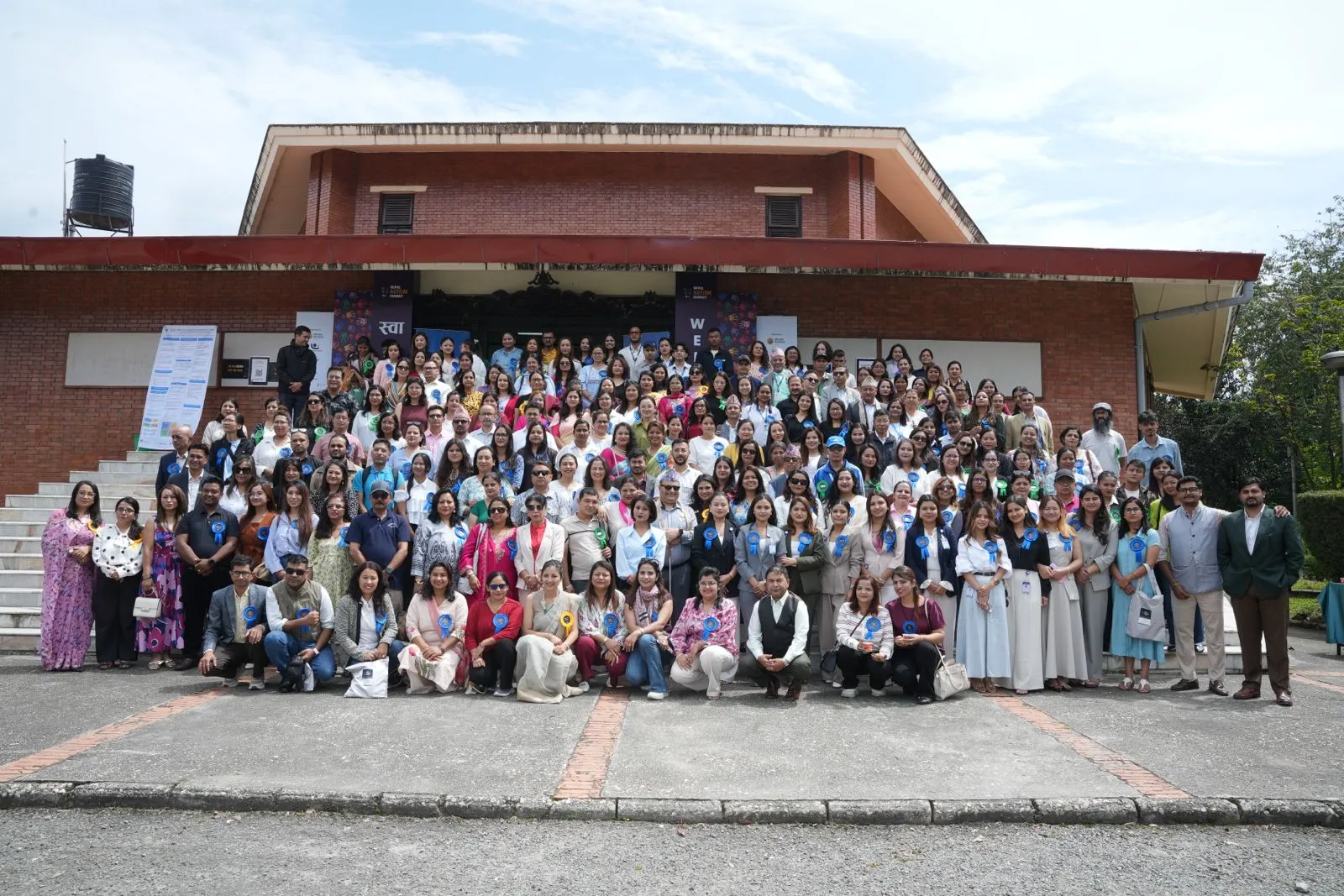
KATHMANDU, NEPAL, 19 September 2026: Nepal’s first Autism Summit was held on 19th September at the Nepal Administrative Staff College in Lalitpur, drawing more than 300 people to the country’s first national, multi-sector gathering on autism inclusion. Attendees included senior government officials, members of parliament, parents and family members, representatives of non-governmental organizations, doctors, and therapists.
The Summit was organized by 19 organizations, including Inclusive Education Nepal, Samanata School, Kathmandu University School of Education, Autism Care Nepal Society, and Aakar Foundation Nepal. The day was structured around six thematic tracks: early identification and early education; parents, families and legal guardianship; financial empowerment and social accountability; health, science and technology; policy, governance and advocacy; and education and research. Each track was led by a dedicated team that met in the weeks before the Summit and presented its findings to the full assembly.
The Summit also marked the release of Nepal's first national dataset on autism in schools and family support systems, giving policymakers and the newly formed working group an evidence base to act on.The day closed with the signing of the Kathmandu Declaration on Autism Inclusion 2026 by the Government of Nepal and the Summit's co-organizing and partner institutions. The Declaration committed signatories to early identification and educational support for autistic children, inclusive education systems backed by trained teachers and adapted curricula, stronger legal guardianship and family support frameworks, expanded employment and social protection for autistic adults, investment in health services and research suited to Nepal's context, and coordinated policy across ministries. It also established a national working group on autism, bringing together government, organizing institutions, and family representatives to carry the commitments forward.
“No single institution or individual can address this alone,” said Ram Tiwari, Director of Inclusive Education Nepal, in his opening remarks. “Every ministry in this hall holds a piece of the problem, and not one of them holds all of it. That is why we asked everyone to come to one hall, on one day, and answer the same questions together.”


.webp)
.webp)

Comments
You need to log in to comment.
Log In